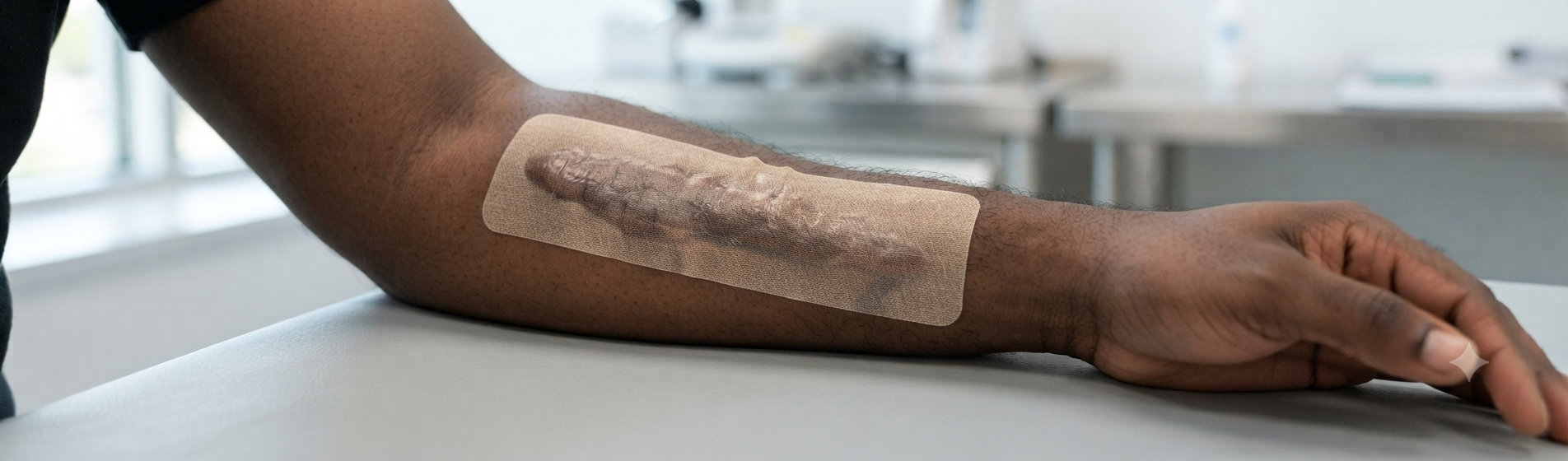
As burn and scald injuries heal, nerves, skin cells, and collagen are actively remodeling. During this process, itching can occur even when the scar is progressing normally. Understanding this distinction is important because fear of itching sometimes leads people to scratch aggressively, stop treatment too early, or assume the therapy has failed.
Key points
- Itching is commonly associated with the healing phase of burn scars.
- Nerve regeneration in healing skin can trigger itching sensations.
- Dryness and reduced skin barrier function often make scars itch more.
- Heat, sweating, friction from clothing, and sun exposure can increase itching.
- Scratching can worsen inflammation, cause skin breakdown, and increase discomfort.
What deserves professional attention is persistent, severe, or changing itching, especially when it is accompanied by redness, warmth, swelling, pain, discharge, or rapid scar thickening. Those features may suggest irritation, infection, allergy, or abnormal scar activity and should be assessed by a qualified clinician.
For many patients, practical measures such as regular moisturising, silicone scar therapy when appropriate, protection from friction, and maintaining a cool environment can reduce itching significantly.
The larger message is this: not every symptom is a sign of deterioration. Educating patients about what is expected during scar healing helps reduce anxiety, improves adherence to therapy, and


